The slot, the party size and the cancellation terms on the booking page are the restaurant's conditions, and pressing book accepts them — that is where the agreement starts. From there the restaurant performs first: the table is held, ingredients are bought and staff are scheduled, and in a full slot other guests asking for the same time are turned away. Cancelling late, arriving late or changing the party size splits the cost three ways — the restaurant (costs already spent, zero revenue if nobody else takes the table), the guest who couldn't book, and the guests who arrived on time and now wait. Cancellation windows, late-arrival grace and deposit terms are set by each restaurant's own policy, not by a national rule, and should be visible when you book. The guest has one thing to do: turn up on time, and say so early if you can't.
For you, searching for a good table on this island
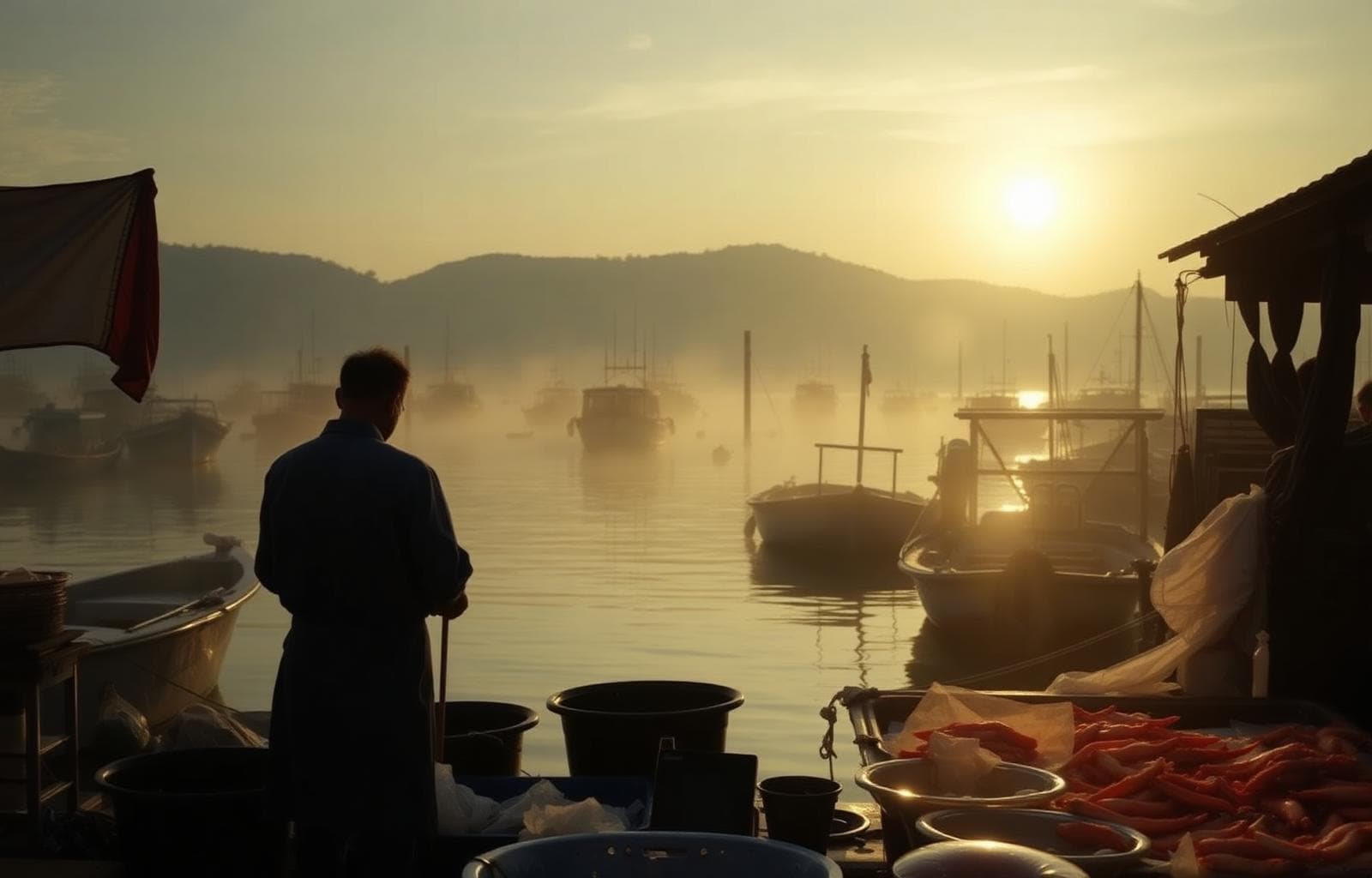
At dawn, Binjiang Market still carries the scent of the sea. Fishmongers hold small flashlights up to the gills and say, “This one’s good,” before swiftly wrapping it up. A few chefs walk by with insulated bags, unhurried but precise—already calculating in their minds: how many reservations today, which dishes for each table, whether there’s room for one extra fish as a surprise.
That “reservation” you made?
It quietly secures a table of dishes before you even arrive.
By noon, the shadows beneath the arcades retreat into the alleys. At an eight-seat counter, a chalkboard reads “This week’s port: Nanfang’ao.” The owner adds a few circles—fully booked. Every two weeks, she opens a small reservation window online. Bookings ebb and flow like tides. Those who arrive on time often meet the dish at its perfect moment—oil temperature just right, knife work just right.
In the evening, friends decide to gather on a whim. At a stir-fry spot, steam clouds the entrance, the sign creaks, and the aroma of braised dishes seems to draw a boundary on the street corner. Places like this usually mean “just walk in.” Ten minutes, one round, dishes arrive with a shout. For larger groups or weekend slots, a quick call ahead helps everyone. The beauty of stir-fry is spontaneity—and spontaneity doesn’t oppose reservations; they simply follow different rhythms.
At night, a dessert studio lights up on the second floor; a small bar opens only from Thursday to Saturday. These intimate spaces rely on reservations—limited staff, precise prep. Most use online systems or forms shared on social media. Remember: submitting a request isn’t confirmation. Wait for a reply or confirmation email. Deposits may be required—not as a barrier, but as a commitment tying that day’s cream, seafood, and effort to you.
Dining in Taiwan has two kinds of beauty:
One lives at night market stalls, where plastic chairs still hold the warmth of the ground.
The other lives in quiet small restaurants, where fire and knives hold the evening in balance.
The first belongs to your footsteps—no reservation needed.
The second asks for a word in advance—so both sides can prepare.
Reservations Are a Collaboration
A restaurant doesn’t begin when you sit down—it starts long before you arrive.
A reservation tells the kitchen how much stock to prepare, which cut of meat to season early. It helps the front of house plan the counter, the tables, and leave a seat for you—even if you’re running late.
If you can’t make it, let them know as early as possible—so another guest, and that fish, can find their place.
Be on time—ideally five minutes early. Many tasting menus are like performances; arriving late doesn’t just mean missing a course, but disrupting the rhythm.
Dietary needs or celebrations? Let them know in advance. Baby chairs, allergies, candles—Taiwan’s small restaurants are warm and accommodating, but they need time.
About deposits: more places now require them due to no-shows and last-minute changes. Often, that deposit simply ensures the best seasonal ingredients are reserved for you.
One Change of Mind, Three Parties Paying
A late cancellation, a late arrival or a last-minute change in party size isn't absorbed by the restaurant alone. The cost splits three ways.
The restaurant. Food and labour were spent before you were due. Once the slot passes, if nobody else takes the table, the revenue for that time is zero — while the costs stand.
The guest who couldn't book. That seat was held for someone who didn't come. In a slot that was already full, it means somebody was turned away who would have shown up.
The guests who arrived on time. Where the kitchen paces courses by slot, a late table pushes into the next one and every table behind it waits. A last-minute change in party size does the same: prep and seating have to be redone, and the strain lands on service.
Every Defence Is Paid For by Someone
A single broken booking can't be recovered, only made less likely in advance. Each of these works, and each is paid for by someone — rarely the person who broke the booking.
- Only take guests they know (regulars, referrals) — new guests pay: with nobody to vouch for you, you can't get a table.
- Make not-coming cost something (card holds, deposits) — guests who do keep their word pay, by fronting money first.
- Price the loss in (service charge, higher prices) — everyone pays, including people who have never missed a booking.
- Stop taking the risk (no reservations, walk-in only) — anyone who has to plan ahead pays: families, elderly guests, people travelling in.
Those defences cost something too — chasing deposits, issuing refunds, handling disputes — and that lands in the price of every dish as well. Which is why the minute it takes to say something early is worth it. The short version lives here: the booking promise.
If You Can’t Get a Table
Try weekday lunches, counter seats, or early/late time slots. Follow social media for last-minute openings. Leave your number for waitlists.
Beyond Taipei, Taichung, and Kaohsiung, consider Tainan’s heritage houses, Hualien’s seaside spots, or Lukang’s local banquet tables—sometimes the best meals are found by changing cities.
A Small Note: Five Simple Things That Help Everyone
Check reservation methods—some accept only calls, others only online forms.
Read the rules—time limits, late policies, cancellation terms are usually clear.
Confirm party size and seating—children, split tables, etc.
Payment methods—some places are cash-only or bank transfer.
Stay flexible—popular spots often require booking days or weeks ahead.
Dining on this island is like its weather—it has seasons and rhythms.
Learn when and how to say, “I’d like to dine,”
and you’ll often find the best bite waiting.
Postscript:
If you’d rather not juggle calls and messages, want to check availability instantly, and receive reminders before your meal, you can use Eatsy to search and book.
Run a restaurant? Eatsy is pay-per-use with no monthly fee and a 7-day free trial (no card, no contract), so online booking and deposits quietly protect every table.
🔗 Read more
- Does Your Café Need a Reservation System? 2026 Honest Guide
- Chef's Table / Private Dining Reservation System Guide 2026: Embed Deposits and Customization Without Breaking the Experience
- How to Choose Reservation System 2026: 5 Must-Check Criteria
- Complete Guide: How to Book Restaurants in Taiwan
- No-show loss calculator
- Reservation system TCO calculator
Frequently Asked Questions
If I cancel a restaurant booking in Taiwan at the last minute, do I have to pay?
It depends on that restaurant's cancellation policy — there is no single national rule. Most don't charge and only ask that you tell them early; the ones taking deposits or card details usually state how far ahead a cancellation is refunded in full and how it is handled after that. Those terms should be visible when you book — if they aren't, ask before booking.
How late can I be before a restaurant releases my table?
Each restaurant sets its own window, and it is often shorter at tasting-menu or set-course restaurants where the whole room starts together. The point isn't the number of minutes: it's telling them as soon as you know. Told, the kitchen can re-time your table; not told, it sits empty waiting.
Why do some restaurants ask for a deposit or card details?
Because the loss from a single no-show can't be recovered, only made less likely in advance. It shows up most at restaurants with few seats, expensive ingredients, or prep that can't be reused the next day. A deposit isn't a fine; it holds the portion being prepared for you. Guests who keep their word carry part of that cost, because they are the ones fronting the money.
If my party gets smaller, do I still need to tell the restaurant?
Yes. Headcount is what prep and seating are built on: six becoming four may mean you were already put on a larger table and six portions were already bought. Said early, both sides still have room to adjust.
Was this helpful?